What Is a Slip Disc?
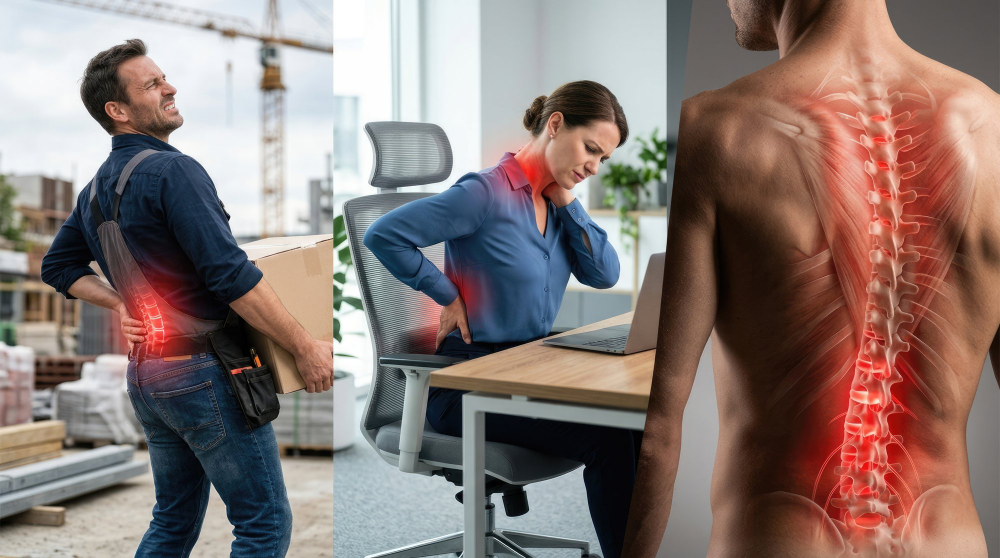
A slip disc, also called a herniated disc, happens when the soft part inside a spinal disc pushes out. This can press on nerves in your back. As a result, you may feel pain, numbness, or weakness. According to the World Health Organization, back pain is a leading cause of disability worldwide. For many people, a slip disc is a common reason for this pain. Although it can happen anywhere along the spine, it most often affects the lower back.
What Is a Muscle Strain?
A muscle strain means a muscle or tendon in your back has stretched or torn. Usually, this happens from lifting something heavy or moving the wrong way. Unlike a slip disc, a muscle strain affects only the muscles or tendons, not the discs in your spine. Most muscle strains heal with rest and simple care at home. However, some strains may need medical help if the pain is severe or lasts a long time.
Key Differences Between Slip Disc and Muscle Strain
It is important to know how to tell slip disc from muscle strain. While both can cause back pain, they are not the same. For example, a slip disc often causes nerve pain, while a muscle strain causes soreness in the muscles. Here are some key differences:
Common Symptoms
Both slip disc and muscle strain can cause back pain. However, their symptoms are different. For instance, slip disc symptoms may include:
On the other hand, muscle strain symptoms often include:
Causes and Risk Factors
There are many back pain causes, but slip disc and muscle strain have different triggers. For slip disc, common causes include:
Meanwhile, muscle strain often happens due to:
Additionally, people who sit for long hours or have weak core muscles are at higher risk for both conditions.
Diagnosis Methods
Doctors use different methods to find out if you have a slip disc vs muscle strain. First, they ask about your symptoms and do a physical exam. Next, they may check your reflexes, muscle strength, and feeling in your limbs. Sometimes, imaging tests help confirm the diagnosis. These may include:
For muscle strain, imaging is rarely needed unless the pain is severe or does not improve.
Treatment Options
Treatment depends on whether you have a slip disc or muscle strain. For muscle strain, most people get better with:
For a slip disc, treatment may include:
According to the CDC, most people with back pain recover without surgery.
Prevention and Lifestyle Tips
Even though back pain is common, you can lower your risk. Here are some tips to help prevent both slip disc and muscle strain:
For example, always bend your knees and keep your back straight when lifting. In addition, try to avoid sudden twisting or jerking movements. These simple steps can help protect your back and reduce the chance of injury. Consult at KHADKE HOSPITAL AND HEALTHCARE PVT.LTD.